

At a Glance
- Service: Adult Orthodontics, full menu: modern metal, ceramic braces, clear aligners, lingual braces, custom brackets
- Serving: Lincroft adults, from the village center and Lincroft Inn corner to the Thompson Park neighborhoods
- New patients: yes; adult consultations are complimentary
- Key differentiator: the office Lincroft kids already trust, now finishing the job for their parents
Every Reason You Have Waited, Answered
It feels vain. Except half the reasons are medical: crowded teeth trap plaque, uneven bites wear enamel and strain jaw muscles, and misaligned teeth contribute to bone loss over decades, which is why dentists keep raising it at your cleanings. It feels late. It is not; teeth move through healthy bone at any age, and adults now approach half of orthodontic patients nationally. It feels like the family already spent its braces budget. Adult cases are often shorter and cheaper than the teenage versions you financed, particularly relapse and limited corrections. And it feels conspicuous, a grown adult in visible treatment, except the current appliance menu was engineered specifically to make that concern obsolete, as the next section details.

What the First Visit Asks of You: Almost Nothing
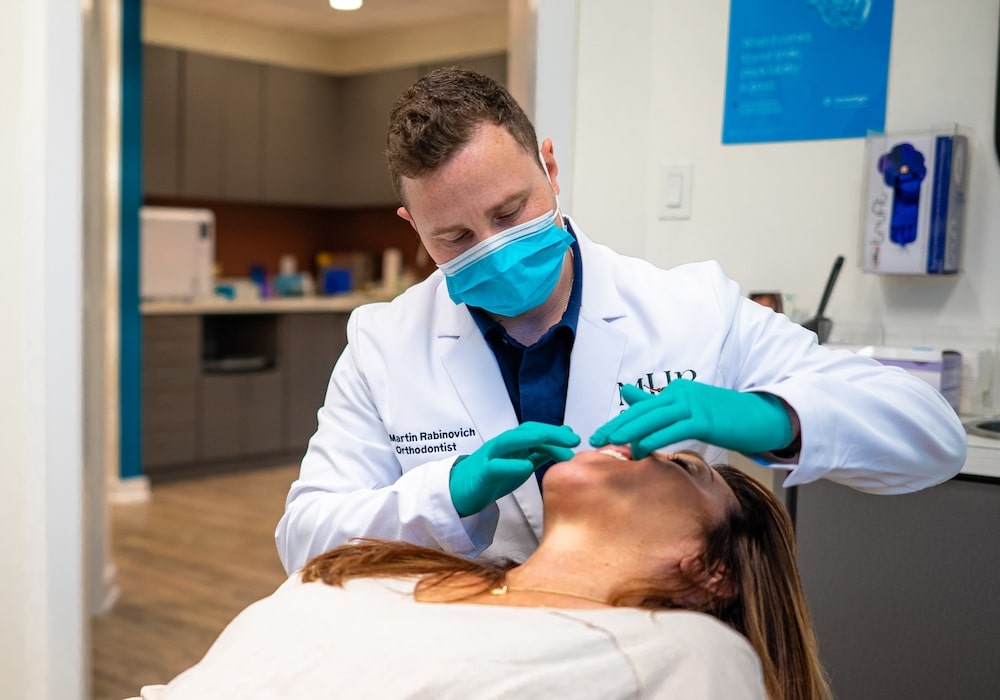
The consultation you have been avoiding runs like this. A conversation about what bothers you, a digital scan instead of impression putty, photographs, x-rays, and a review where Dr. Martin Rabinovich shows you, on screen, what movement your case needs and which appliances fit it. You leave with a written plan, an exact price, and zero follow-up pressure. No needles, no drilling, no commitment, no charge. Parents who sat through their kids' versions will recognize the rhythm; the difference is that this time the scan is yours, and the decision is nobody's homework but your own.
An Honest Word on Candidacy
Most waiting-room veterans qualify. Mild to moderate crowding, spacing, and the drift that follows a retainer lost decades ago all treat routinely, and crowns, veneers, and older dental work rarely interfere; implants stand fixed and get planned around. The genuine gate is gum health: stable periodontal tissue before force applies, coordinated with your dentist where needed. Severe rotations and major bite corrections steer toward fixed appliances rather than aligners, which is why the full menu matters. And the mild case that bothers nobody earns an honest keep-your-money, delivered as readily to a parent as it would be to their teenager.
The Months In, the Years After
Treatment slots into a Lincroft parent's calendar more easily than the version you chauffeured. Checkpoints run every 8 to 12 weeks, ten minutes from the village, and can stack with a teen's visits when the household runs two cases. Adjustment or tray-change pressure fades within days. Cases finish in roughly 6 to 24 months by complexity and appliance, and then retention begins: custom retainers, nightly at first and tapering, held to the standard you once enforced at someone else's bathroom sink. Adults keep that standard for themselves remarkably well, having personally written the checks the retainers protect.
The Money Part, Parent Edition
Having financed a teenager's case, you already know the shape of the numbers; yours will likely be gentler. Adult corrections, especially relapse and limited cases, often run shorter than the full course you paid for last time, and the fee scales with the scope. Your dental plan's orthodontic benefit may cover adults under its lifetime maximum, language the front desk reads before quoting so nothing is assumed, and FSA or HSA funds apply on top. No-interest monthly plans carry the remainder, structured at the consultation alongside a written figure. The family that already survived one orthodontic budget will find the sequel a smaller production.
Meet Dr. Rabinovich: The Doctor Your Kids Already Know

For a lot of Lincroft families, Dr. Martin Rabinovich needs no introduction, just a role reversal. The board-certified orthodontist who planned your teenager's case, Rutgers-trained, residency and Master of Science in Dentistry from the University of Colorado, with cleft and craniofacial casework through the Children's Hospital of Colorado, applies the same standard to the parents who used to do the driving. His office rule translates cleanly across generations: treat every patient the way you would want your own family treated. The team that learned your kids' names will learn that you take your coffee into morning appointments, and the specialist who finished their smiles has been quietly expecting you.
Adult Orthodontics
Our Dental Services Include:
Lincroft Adult Orthodontics FAQs
I have sat in your waiting room through my kids' whole treatments. Is it strange to become the patient now?
A: It is common enough to be a pattern. A meaningful share of adult cases here are parents of current or former teen patients, who watched the process work and decided their turn was overdue. The team already knows your family, your insurance, and your calendar, which makes your case the easiest start in the building.
Will treatment be obvious in family photos during a milestone year?
A: Not unless you choose an option that shows. Aligners and lingual braces are effectively invisible to a camera, and ceramic braces read as subtle at portrait distance. If a graduation or wedding sits mid-treatment, say so at the consultation; appliance choice and even tray scheduling can be planned around the photo calendar.
I am worried the exam will turn up a mountain of other dental work I need. Does that happen?
A: The consultation evaluates orthodontic candidacy, not a full restorative treatment plan, and it does not ambush you with one. If something genuinely needs your dentist's attention first, such as active gum inflammation, you will hear it plainly and the office coordinates with your own dentist. The scan cannot obligate you to anything; it can only inform you.
What happens if I start treatment and decide I want to stop?
A: You can stop; treatment is voluntary at every stage. The honest caveat is that partially moved teeth are best either finished or deliberately stabilized, so the office would map a responsible off-ramp, often a shortened plan to a stable stopping point plus retention, rather than simply abandoning mid-movement. That conversation is available at any checkpoint, without drama.
Will I be the only adult in the chair, or do other Lincroft parents actually do this?
A: You will have company. Adults are a substantial share of this practice's caseload, in line with the national picture where adults approach half of orthodontic patients, and Lincroft parents specifically are well represented, often starting the same season a second child does. The waiting room demographic looks different from the one you remember.
Got a question? We have answers.
Follow us on social media!
