

At a Glance
- Service: Adult Orthodontics, all five appliance categories explained and offered
- Serving: Middletown Township adults, from the Kings Highway historic district to the train station neighborhoods and Bayshore villages
- New patients: yes; consultations are complimentary
- Key differentiator: five appliance systems held to one clinical decision standard, with the tradeoffs explained before you choose
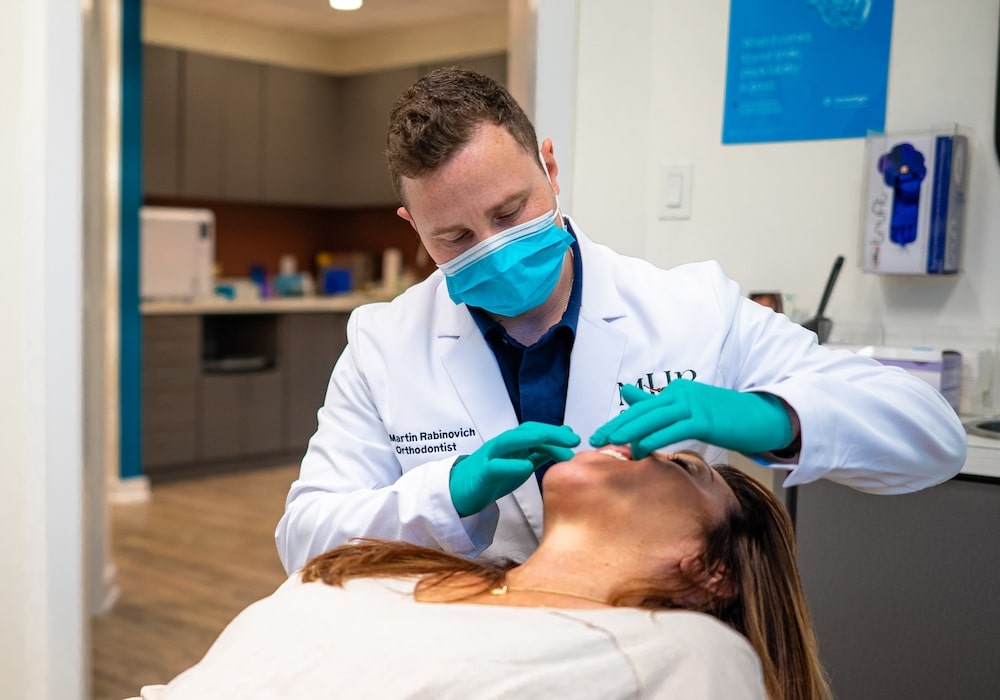
Modern Metal: The Efficient Workhorse
Start with the option adults dismiss fastest and orthodontists respect most. Modern metal braces are smaller, smoother, and faster-working than the hardware in your yearbook, and they remain the most efficient instrument for complex corrections: severe rotations, large bite discrepancies, and movements that demand constant fixed control. They never come out, so compliance is automatic, and they typically anchor the value end of the fee menu. The tradeoff is the obvious one, visibility, which is why the rest of the menu exists. Adults whose cases are genuinely hard, and adults who simply want the shortest reliable route, still choose metal deliberately, and they are not wrong to.

Clear Aligners: The Removable Route
Clear aligners handle mild to moderate crowding, spacing, and relapse through transparent, removable trays worn 22 hours a day and swapped every one to two weeks. The office carries both major systems, Invisalign and Spark, and the Middletown clear braces page on this site walks the aligner route in full depth, so this page keeps it to the menu-level tradeoff: aligners buy invisibility and removability at the price of discipline, since every hour out of the mouth is an hour of no treatment. Adults with structured routines, and this township's commuter culture qualifies, tend to wear them impeccably. Adults who graze all day or misplace small objects should read the fixed options twice.
InBrace: Fixed Control, Zero Visibility
InBrace lingual braces mount entirely behind the teeth, delivering fixed-appliance control that no camera, colleague, or dinner guest can detect from any angle. They serve two adult profiles: cases that need fixed mechanics but cannot show hardware, and patients for whom even near-invisible is not invisible enough. The tradeoffs are specific: the tongue needs an adaptation period of days to a few weeks, speech can lisp briefly while it adjusts, and the custom fabrication behind each tooth places lingual treatment at the premium end of the fee menu. For the adults who need what it uniquely offers, nothing else on the menu substitutes.
LightForce: Brackets Printed for Your Teeth
LightForce brings 3D printing to fixed treatment: brackets designed digitally for your individual teeth rather than stocked in standard shapes, which improves fit and can streamline treatment on cases that suit it. Middletown families may recognize the name from a teenager's treatment; the system serves adults identically, in tooth-colored ceramic hardware. It occupies the custom end of the fixed menu, recommended where the digital precision earns its fee, and Dr. Rabinovich is certified across it, InBrace, both aligner systems, and conventional braces, which is what keeps the recommendation clinical rather than inventory-driven.
How the Choice Actually Gets Made
The menu narrows fast once your scan enters the room. Digital records quantify the movements your case needs, and the movements disqualify options before preferences ever vote: severe rotations cross aligners off, zero-visibility requirements cross off everything but lingual and trays, hard-case efficiency argues for metal or LightForce. What remains is usually a two-option shortlist where your priorities, visibility, removability, fee tier, adaptation tolerance, make the final call with the tradeoffs on the table. Candidacy prerequisites hold across the menu: stable gums before force, restorations planned around rather than through, and honest wear expectations. The complimentary consultation runs this narrowing live, on your data.
Living With Whichever You Choose
Daily life converges more than the menu suggests. Every option brings brief pressure after adjustments or tray changes, checkpoint visits every 8 to 12 weeks that fit around North Jersey Coast Line schedules, and a treatment span of roughly 6 to 24 months by complexity. Fixed appliances add hygiene minutes and a short list of foods to avoid; aligners add a wear-discipline habit instead. All roads end identically: custom retainers, nightly at first and tapering, holding the result while adult bone consolidates. The appliance is a vehicle; the retention is the warranty; and the smile is the same regardless of which badge was on the hardware.
Meet Dr. Rabinovich: Why He Carries All Five

A five-system menu is expensive to maintain: separate certifications, separate planning platforms, separate clinical fluencies. Dr. Martin Rabinovich carries them anyway, because his training taught him what single-product treatment costs patients. Board certified by the American Board of Orthodontics, Rutgers-trained, and residency-finished at the University of Colorado with a research Master of Science in Dentistry and cleft and craniofacial casework through the Children's Hospital of Colorado, he built a practice where the appliance follows the diagnosis instead of the other way around. The walkthrough on this page is the philosophy in written form: show the tradeoffs, run the scan, and let the case pick its tool.
Adult Orthodontics
Our Dental Services Include:
Middletown Adult Orthodontics FAQs
What is the real difference between ceramic braces and metal, beyond the color?
A: Mechanically, almost nothing; both move teeth through brackets and wires under the same plan. Practically: ceramic brackets sit slightly larger, their clear ties can pick up stain from heavy coffee or tomato sauce between visits, and the fee runs modestly higher for the discretion. Treatment quality is identical, so the choice is about visibility and budget.
My Middletown South student had LightForce brackets. Is that system available for adults too?
A: Yes, identically. LightForce 3D printed brackets serve adult cases the same way, in tooth-colored ceramic hardware designed digitally for each tooth. Adults whose cases suit fixed treatment and who want customized precision are candidates, and the consultation shows what the system would and would not add for your specific movements.
Do behind-the-teeth braces bother the tongue or speech more than aligners do?
A: Initially, yes. Lingual hardware shares space with the tongue, so expect an adaptation period of days to a few weeks with some temporary lisping, where aligners cause at most a brief, mild speech change. After adaptation, most lingual patients speak normally. If early speech matters critically to your work, raise it at the consultation and the timing can plan around it.
What makes Dr. Rabinovich recommend fixed braces over aligners for some adults?
A: The movements, mainly. Severe rotations, significant vertical corrections, and large bite discrepancies respond more predictably to fixed appliances, and patients with unreliable wear habits get better results from hardware that never comes out. When the scan shows a case both routes could finish well, the recommendation presents the tradeoffs and the choice is yours.
Years of commuter coffee have stained my teeth. Should whitening happen before or after straightening?
A: After, almost always. Whitening lands evenly on aligned teeth because every surface sits exposed, while pre-treatment whitening leaves shadows where teeth overlapped once they move apart. Finish the alignment, then brighten the finished geometry; the office sequences both when you plan treatment.
Got a question? We have answers.
Follow us on social media!
