

At a Glance
- Service: Adult Orthodontics planned around existing dental work: crowns, fillings, root canals, grafts, and gaps
- Serving: Morganville and western Marlboro Township, from the Route 79 corridor to the Wickatunk side
- New patients: yes; consultations are complimentary
- Key differentiator: treatment sequencing coordinated directly with your dentist, so the dental work you own gets protected
The Inventory Question
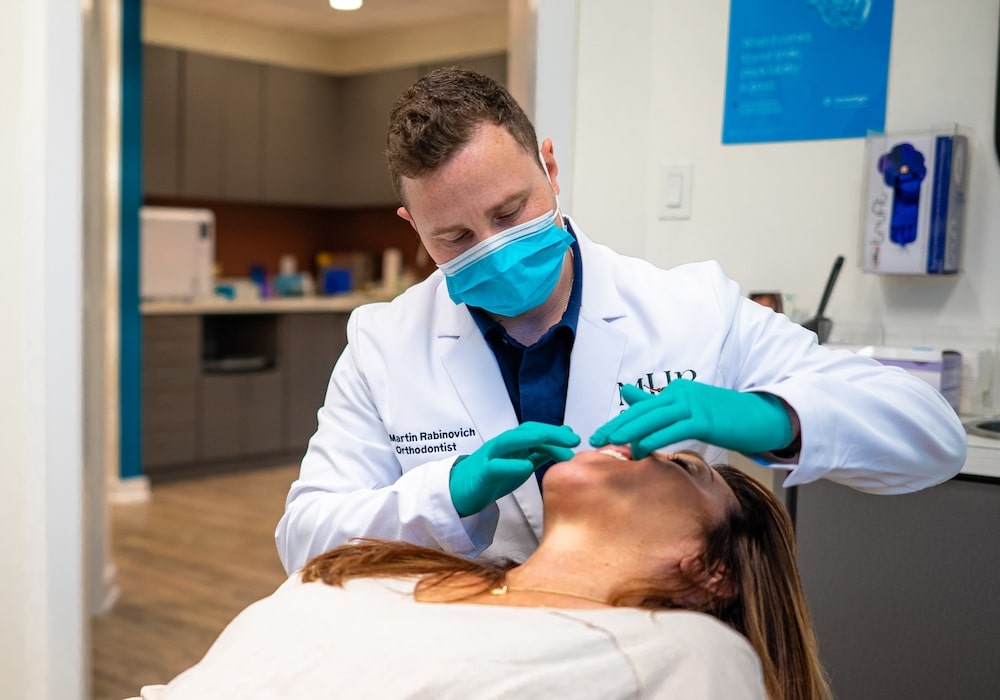
Candidacy for a restored mouth starts with a catalog, not a verdict. The consultation's digital scan, x-rays, and exam map every restoration and its condition: which teeth carry crowns, which roots have been treated, where fillings sit and how large they run, what the gum and bone picture looks like around each. Dr. Martin Rabinovich, a board-certified orthodontist, reads that catalog personally and builds the movement plan on top of it, because in adult treatment the restorations are not obstacles to the plan. They are inputs to it, each with known behavior, and the next section walks through exactly how each type behaves under orthodontic force.

Sequencing: Orthodontics and Your Next Crown
The most valuable candidacy conversation for a restored mouth is about order of operations. Pending dental work and orthodontics interact, usually in your favor when sequenced deliberately: alignment first often means your dentist crowns a tooth in its corrected position rather than rebuilding around a tilt, and closing or opening spaces orthodontically can turn a compromised restoration plan into a clean one. Tipped neighbors around an old extraction gap can be uprighted to receive a future implant properly, or simply to restore function where no implant is planned. The office coordinates this sequencing directly with your dentist, mapping which treatment goes first and why, before either begins. Restored mouths do more than tolerate that coordination; they profit from it.
The Appliance Menu Around Restorations
Every appliance category works with a restored mouth, chosen by the same scan-first logic as any case. Clear aligners, in Invisalign and Spark systems, adapt naturally around crowns and fillings, with the aligner route detailed on the Morganville clear braces page of this site. Ceramic clear braces and modern metal provide fixed control where the movements demand it, bonding protocols adjusted for restored surfaces. InBrace lingual braces and LightForce 3D printed brackets are fabricated from your digital scan, restorations included in the geometry from the start. The appliance decision follows the movements your case needs; the inventory shapes the execution details, which is exactly the kind of detail a single-specialist practice keeps in one set of hands.
The Perio Gate
One gate is absolute for restored and unrestored mouths alike: periodontal health. Gums and supporting bone carry the entire force system, so active gum disease gets stabilized first, in coordination with your dentist or periodontist, and grafted areas get confirmed as healed and settled before force applies nearby. Adults with perio history are not disqualified; they are sequenced, and the months spent stabilizing tissue are an investment the eventual result stands on. The consultation reads your gum and bone picture honestly, and where the answer is not yet, it comes with a specific path to yes rather than a door.
Treatment and After, Coordinated
A restored-mouth case runs on the standard rhythm with an extra layer of communication. Checkpoints every 8 to 12 weeks track movement against plan; your dentist stays informed at the milestones that matter, cleanings continue as normal, and any mid-treatment restorative need slots into the sequence rather than colliding with it. Cases run roughly 6 to 24 months by complexity and appliance. Retention then protects both the alignment and the restorations it now serves: custom retainers nightly at first, tapering, with any bonded retention planned around your dental work. The finished state is a mouth where the orthodontics and the restorative dentistry finally agree, which is what all that responsible maintenance was building toward anyway.
Meet Dr. Rabinovich: The Coordinator
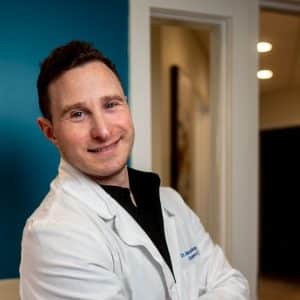
Restored-mouth orthodontics is a team sport, and this practice quarterbacks it deliberately. Dr. Martin Rabinovich, board certified by the American Board of Orthodontics, trained at Rutgers School of Dental Medicine and completed his residency in Orthodontics and Dentofacial Orthopedics at the University of Colorado, where his research Master of Science in Dentistry and his cleft and craniofacial caseload through the Children's Hospital of Colorado built the habit of planning across specialties. In practice that means direct communication with your dentist, sequencing mapped before treatment starts, and a Marlboro Township native, Morganville's own township, personally supervising every checkpoint. Your dentist protected the inventory for twenty-five years; this office makes sure the orthodontics honors the investment.
Adult Orthodontics
Our Dental Services Include:
Morganville Adult Orthodontics FAQs
I have a root canal tooth. Can it move safely?
A: Yes, routinely. Tooth movement happens through the bone at the root surface and does not require a living nerve, so endodontically treated teeth relocate like any others. The x-rays at your consultation confirm the treated tooth and its root are sound, and the plan proceeds normally from there.
Half my molars have large fillings. Do brackets and aligner attachments bond to filled teeth?
A: Yes, with adjusted technique. Bonding protocols differ slightly for composite and other restored surfaces, and the clinical team handles that chairside as standard practice. Very large or aging restorations occasionally get flagged for your dentist's attention first, which the consultation identifies before anything is placed.
My dentist wants to crown two teeth. Should the orthodontics happen before or after the crowns?
A: Usually before, and the coordination is the point. Aligning first lets your dentist build the new crowns to teeth in their corrected positions, which typically produces a better fit and a cleaner bite than crowning around a tilt. The office maps the exact sequence with your dentist before either treatment starts, case by case.
I had gum grafting a few years ago. Does grafted tissue handle tooth movement?
A: Once healed and stable, generally yes. Successful grafts integrate into the periodontal picture and support movement like native tissue, and the plan treats grafted areas with appropriate care on force and pacing. Your periodontist's records join the planning, and clearance is confirmed rather than assumed.
A tooth was pulled years ago and the neighbors have tilted into the gap. Can they be uprighted even if I never get an implant?
A: Yes. Uprighting tipped teeth is a legitimate goal on its own: it restores proper bite function, makes the area cleanable again, and stops the progressive collapse an old gap invites. If you later choose an implant, the corrected space receives it properly; if you never do, the uprighted teeth still serve you better than the tilt did.
Got a question? We have answers.
Follow us on social media!
