

At a Glance
- Service: Adult Orthodontics for every adult decade, with the full appliance menu
- Serving: Tinton Falls, from the borough hall and falls side to the Shrewsbury Avenue corridor and the retirement communities
- New patients: yes; consultations are complimentary
- Key differentiator: adult cases planned around crowns, bridges, partials, and implants rather than despite them
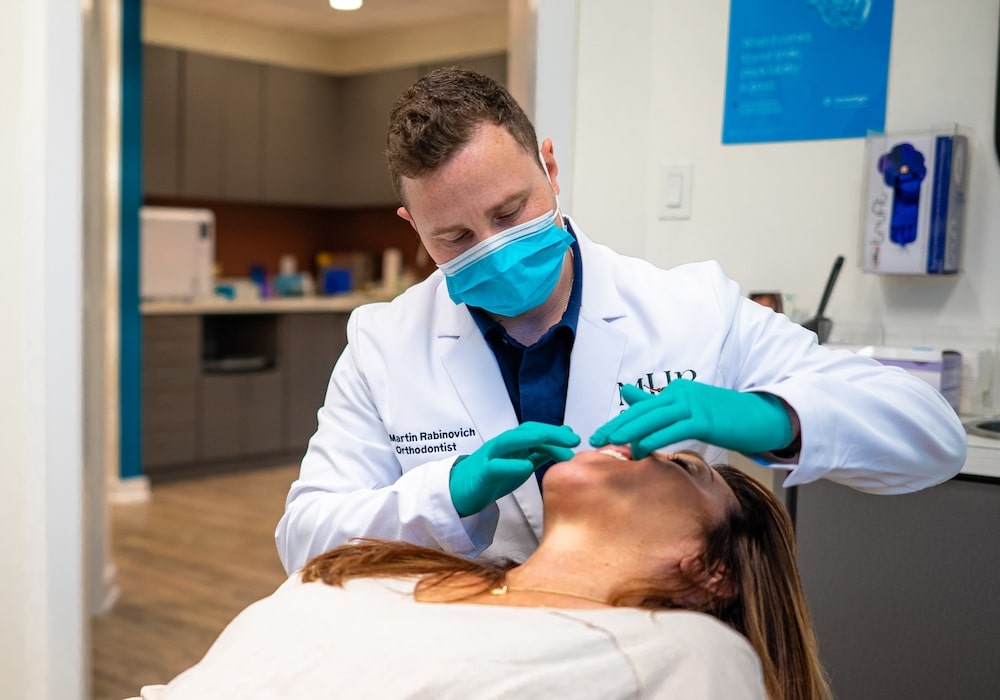
Why Sixty-Five Is a Rational Time to Straighten Teeth
The case rests on trajectory, not vanity. Crowded and drifting teeth get harder to clean each year, and the gum inflammation that follows is the leading reason older adults lose teeth. Uneven bites concentrate chewing force on a shrinking set of overworked teeth, accelerating wear, cracks, and the restorative cascade that follows. Misaligned teeth also shortchange the bone that supports them. Alignment interrupts all three trajectories at once: cleanable surfaces, distributed bite forces, properly loaded bone. A sixty-five-year-old with decades of chewing ahead is not late to this decision; they are exactly the person with the most tooth-years left to protect.

Outcomes Around the Dental Work You Already Own
A Tinton Falls retiree's mouth is usually a portfolio: crowns from the eighties, a bridge from the aughts, perhaps a partial denture or an implant. Treatment plans are built around that inventory, and often in its service. Crowned teeth move like natural teeth. Bridges move as connected units with defined limits. Implants stand fixed and serve as planning anchors. Partial dentures are the interesting case: when the teeth a partial clasps onto drift, the appliance loosens, and orthodontics can stabilize or reposition those anchor teeth so the partial seats properly again, or set up cleaner geometry for a future one. Late-life orthodontics is frequently infrastructure work that makes the rest of your dentistry function better.
Options That Respect a Retiree's Patience
The full menu serves every decade. Clear aligners, in Invisalign and Spark systems, suit retirees well: removable for meals and cleaning, gentle on gum tissue, invisible at the card table, with the aligner route covered fully on the Tinton Falls clear braces page of this site. Ceramic clear braces provide fixed control in quiet hardware for cases that need it, modern metal remains the efficient option for complex corrections, and InBrace lingual braces and LightForce custom brackets round out the specialty end. Dr. Martin Rabinovich, a board-certified orthodontist, matches the appliance to the scan and to the hands, since dexterity with small trays is a legitimate planning consideration this office asks about rather than assumes.
Candidacy After a Long Dental History
The gate at any age is periodontal: gums and bone must be stable before force applies, and older adults with gum disease history simply sequence that treatment first, coordinated with their dentist or periodontist. Medications and dry mouth, common companions of the decade, get factored into the plan rather than treated as surprises. Beyond the gate, most retiree cases qualify, and the honest exceptions get honest handling: bone support too depleted for movement earns a no with the reasoning shown, and drift so mild it threatens nothing earns a keep-your-money. The consultation is free, the scan is quick, and the answer arrives the same visit.
Treatment Pace and the After-Years
Retirement is the easiest calendar this office treats. Checkpoints every 8 to 12 weeks book into quiet weekday mornings, adjustment pressure fades within days, and cases run roughly 6 to 24 months at the deliberate pace mature bone prefers, a pace a retiree's schedule accommodates without noticing. Retention follows for good: custom retainers nightly at first, tapering to maintenance, protecting the investment for the decades of dinners it was made for. Grandchildren's visits, travel seasons, and the borough's summer calendar all continue uninterrupted; the treatment rides along rather than presides.
Meet Dr. Rabinovich: Comfortable with Complicated Mouths
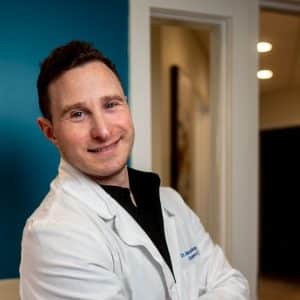
The specialist auditing this cohort's candidacy belongs to it. Dr. Martin Rabinovich was born and raised in Marlboro, came up through the same township institutions as the adults reading this page, and returned after Rutgers School of Dental Medicine and a University of Colorado residency in Orthodontics and Dentofacial Orthopedics, research Master of Science in Dentistry included, to practice twenty minutes from home. Board certified by the American Board of Orthodontics, he treats the parents of his teen patients and, increasingly, the classmates of his own generation, whose nineties-era orthodontic history he understands from the inside. Candidacy conversations go easier with someone who remembers exactly why your family did or did not do braces the first time.
Adult Orthodontics
Our Dental Services Include:
Tinton Falls Adult Orthodontics FAQs
At sixty-eight, does treatment still pay off health-wise, or did that ship sail?
A: It pays off in the years you have the most reason to protect. Alignment makes teeth cleanable and distributes bite forces properly, which directly serves keeping natural teeth into your eighties and nineties. The ship sails only when periodontal support is too depleted to move teeth safely, and the scan tells you honestly which situation is yours.
Can straightening actually help me keep my natural teeth longer?
A: That is its strongest late-life argument. Crowding traps the plaque that drives gum disease, the leading cause of tooth loss in older adults, and uneven bites overload individual teeth toward cracks and extractions. Correcting both trajectories protects the whole arch at once. Alignment does not replace hygiene and dental care; it makes both dramatically more effective.
My partial denture has gotten loose because the teeth it clasps are drifting. Can orthodontics fix that?
A: Frequently, yes. Repositioning or stabilizing the anchor teeth a partial clasps onto can let the appliance seat properly again, or set up better geometry for a replacement partial your dentist makes afterward. The sequencing between this office and your dentist gets mapped before either step starts, so the two treatments serve each other.
Will Medicare or my Medicare Advantage dental rider cover any of this?
A: Original Medicare does not cover orthodontics. Some Medicare Advantage plans include dental riders, and a minority of those extend any benefit toward orthodontic treatment, so the honest step is reading your specific rider's language, which the front desk does at the consultation. Where coverage is absent, FSA-style retiree accounts and the office's no-interest monthly plans carry the fee.
I take medications that dry my mouth. Does that affect wearing aligners?
A: It is manageable and worth planning for. Dry mouth raises cavity risk generally, and aligner trays can slightly reduce saliva flow around the teeth, so the plan pairs treatment with hydration habits, fluoride support from your dentist, and sometimes a preference for fixed appliances instead. Bring your medication list to the consultation; it is a planning input, not a disqualifier.
Got a question? We have answers.
Follow us on social media!
