

At a Glance
- Service: Clear Braces, in your choice of Spark Clear Aligners or Invisalign
- Serving: Fair Haven, from the River Road corridor to the Fair Haven Fields neighborhoods
- New patients: yes; consultations are complimentary
- Key differentiator: insurance verified and the quote itemized in writing before any commitment
The Anatomy of an Aligner Fee
One quote can differ from another for reasons that matter and reasons that do not. The legitimate drivers are complexity, duration, and what the fee includes. A case correcting a deep bite over sixteen months costs more to run than one closing a gap in eight, because it consumes more stages and more supervision. The inclusion question is where quotes get slippery elsewhere: at MHR Orthodontics, refinement trays, the retention plan, and every checkpoint visit are inside the written number, so the figure you approve is the figure you pay. Spark and Invisalign price comparably here for equivalent cases, keeping the system choice clinical. When you compare quotes across offices, compare what is inside them; a lower number that bills refinements separately is frequently the higher number wearing a disguise.

What the Fee Buys, Clinically
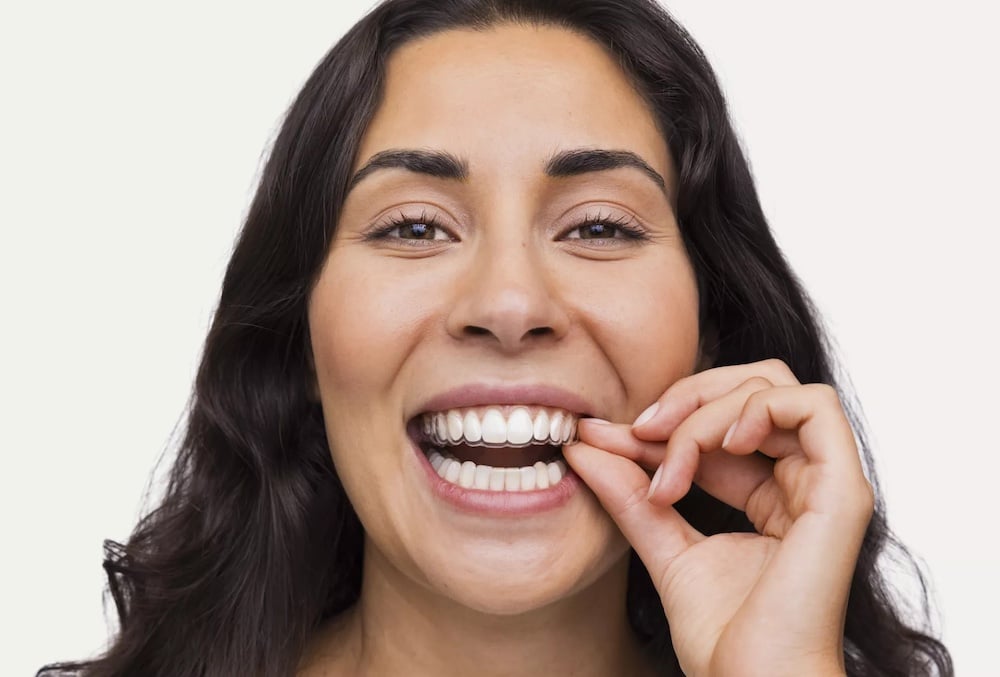
The purchase behind the numbers is a supervised movement of your teeth. A digital scan, photographs, and x-rays feed a stage-by-stage plan engineered by Dr. Martin Rabinovich, a board-certified orthodontist. The trays execute it: transparent, removable, changed every one to two weeks at home, worn 22 hours a day, with tooth-colored attachments lending grip where individual movements demand it. Invisalign brings the category's deepest clinical history through its SmartTrack material; Spark, made by Ormco, brings TruGEN material with better stain resistance than the leading brand in Ormco's published lab testing. Checkpoints every 8 to 12 weeks compare actual positions against plan, refinements correct any drift, and most cases finish in 6 to 18 months. That supervision layer is the part mail-order alternatives amputate to hit their price, and it is the part that determines where the case actually finishes.
Candidacy, Priced Honestly
The cheapest treatment is the one that fits the case the first time. Aligners fit mild to moderate crowding, spacing, and adult relapse, worn by patients who will honor the daily requirement; they do not fit severe rotations, major skeletal corrections, or mouths still shedding baby teeth, and forcing them onto those cases is how money gets spent twice. The same office carries LightForce custom braces and InBrace lingual braces for the cases aligners should not take, and the complimentary consultation ends with the recommendation the scan supports, including wait when wait is the answer. An honest no at the start is the largest discount in orthodontics.
The Months Between Payments
While the monthly plan runs, treatment itself asks little. Trays change at home, each new set opening with a day or two of pressure that fades as teeth respond. Short office visits every 8 to 12 weeks confirm tracking and hand off the next series, an errand that fits between River Road school pickup and dinner. At the end, custom retainers guard the result while bone consolidates around the moved roots, on a schedule that tapers from nightly toward maintenance. Retention is where the investment either compounds for decades or quietly evaporates, and this office treats it as part of the purchase rather than an epilogue.
The Household Version of the Math
Fair Haven cases often arrive in pairs, a teen plus a parent whose own teeth drifted since the nineties, and pairing changes the arithmetic favorably. Each family member carries a separate orthodontic lifetime maximum, so two treatments can draw on two benefits in the same season. Checkpoint visits stack back to back, halving the trips. And adult relapse cases frequently run shorter than a teen's full course, so the parent's fee lands smaller than expected. The consultation quotes each case on its own merits, in writing, and the household decides with all the numbers on one table.
Meet Dr. Rabinovich: What the Credential Is Worth

In a page about value, the doctor's file reads as a line item, so read it that way. Board certification through the American Board of Orthodontics is a voluntary credential requiring written and clinical examinations beyond a state license; only a fraction of practitioners hold it, and Dr. Martin Rabinovich does. His training stack runs Rutgers for the Doctor of Dental Medicine, then the University of Colorado for a specialty residency in Orthodontics and Dentofacial Orthopedics and a research-based Master of Science in Dentistry, with a caseload that included cleft and craniofacial patients through the Children's Hospital of Colorado. A Marlboro native, he supervises every case in the practice personally. When two quotes look similar, the question is who engineered the plan behind each one; here, that answer is on this page.
Orthodontist in Atlantic Highlands, NJ
Our Dental Services Include:
Got a question? We have answers.
Follow us on social media!
