

At a Glance
- Service: Clear Braces, in two systems: Spark Clear Aligners and Invisalign
- Serving: the Fort Monmouth redevelopment area and its Oceanport, Eatontown, and Tinton Falls surroundings
- New patients: yes; consultations are complimentary and commitment-free
- Key differentiator: a pressure-free first visit where the exam, scan, and written quote come with zero obligation
The Reasons People Wait
The hesitations follow patterns, and naming them takes their power away. Some people fear the verdict: that an orthodontist will find their teeth uniquely bad. They will not; a specialist who trained on cleft palate and craniofacial cases has genuinely seen everything, and crowded teeth register as routine, never as shocking. Some fear the sales pressure, the consult that turns into a closing pitch. That does not happen here; the quote goes on paper and goes home with you. Some fear being the oldest person in a waiting room of twelve-year-olds. Adults now make up a substantial share of aligner patients nationally, and at this office they are a daily normal. And some simply fear commitment to a process they cannot picture. The rest of this page fixes that.

Spark and Invisalign, Without the Jargon
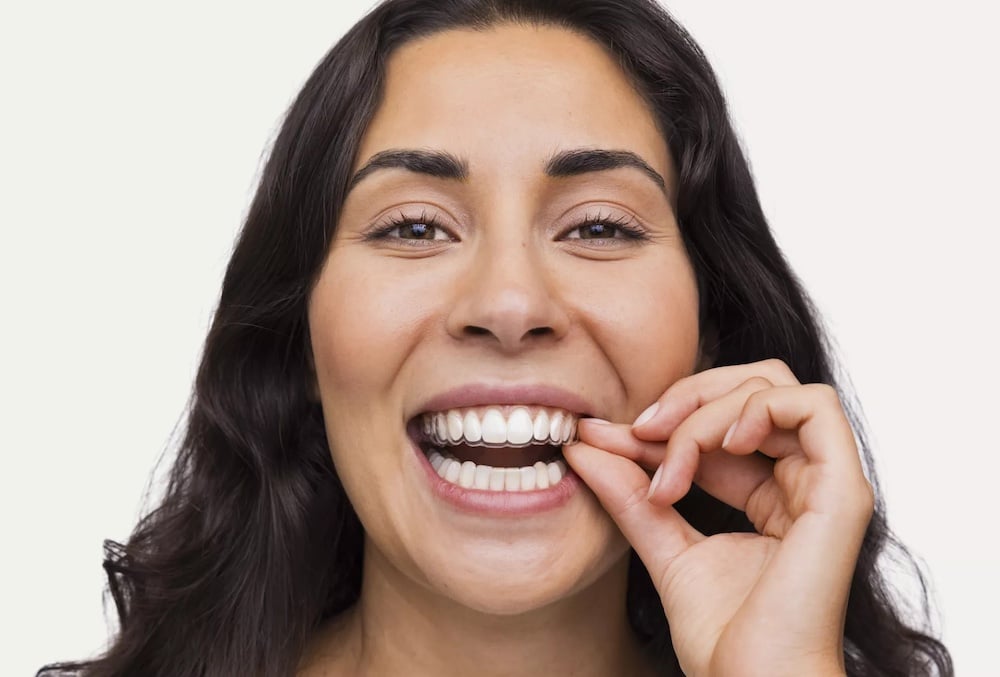
Both systems work the same way at the level that matters: a series of clear, removable trays, each nudging specific teeth a small planned distance, worn 22 hours a day and swapped every one to two weeks. Invisalign is the name everyone knows, with the longest clinical track record in the category. Spark, made by Ormco, uses TruGEN material that stays clearer against coffee and tea staining in Ormco's published lab testing and trims flat at the gumline for comfort. Nearly invisible describes both honestly: at conversation distance, coworkers and clients simply do not clock them. Treatment typically runs 6 to 18 months. If your case needs something aligners cannot deliver, the same office carries LightForce custom braces and InBrace lingual braces, and you will hear that recommendation plainly instead of being sold the wrong tool.
Honest Candidacy, Including the No
Fear feeds on vagueness, so here is the clear version. Aligners suit mild to moderate crowding, spacing, and relapse from earlier orthodontics, in adults and mature teens who will wear the trays consistently. They are the wrong choice for severe rotations, major skeletal bite problems, and mouths still waiting on adult teeth. If your case lands in the second group, the consultation says so directly and explains the better alternative. A no at this office is a real clinical answer, and hearing one costs you nothing but the drive. That guarantee alone has gotten a lot of ten-year procrastinators through the door.
During Treatment: Smaller Than You Think
The imagined version of orthodontics is a year of visible hardware and constant appointments. The real version is quieter. Trays change at home. Pressure lasts a day or two per set, closer to awareness than pain, and patients who want an easier ramp start each new tray at bedtime. Office visits come every 8 to 12 weeks and stay short. A few tooth-colored attachments may ride along on certain teeth, invisible at any normal distance. Afterward, custom retainers hold the result while bone consolidates around the moved roots. The whole process fits inside a normal life so completely that the most common end-of-treatment comment is some version of that was it?
Meet Dr. Rabinovich: Calm Hands for Nervous Patients

Anxious patients tend to relax around competence, and Dr. Rabinovich's training was built on the hardest cases orthodontics has. During his residency in Orthodontics and Dentofacial Orthopedics at the University of Colorado, he treated cleft lip and palate patients and craniofacial anomaly cases through the Children's Hospital of Colorado, work that demands precision and a steady chairside manner in equal measure. He returned to New Jersey board certified by the American Board of Orthodontics, a voluntary credential most practitioners never pursue, and built a Shrewsbury practice on the rule his team quotes daily: treat every patient the way you would want your own family treated. Crooked teeth do not surprise him, embarrass him, or change how he speaks to you. They are simply the solvable problem you brought in, and solving it is the easiest part of his week.
Orthodontist in Atlantic Highlands, NJ
Our Dental Services Include:
Got a question? We have answers.
Follow us on social media!
