

At a Glance
- Service: Clear Braces, available as Spark Clear Aligners or Invisalign
- Serving: Holmdel, including the Crawfords Corner and Bell Works area, plus neighboring Lincroft and Middletown
- New patients: yes, and the first consultation is complimentary
- Key differentiator: every movement plan is engineered and supervised personally by a board-certified orthodontist
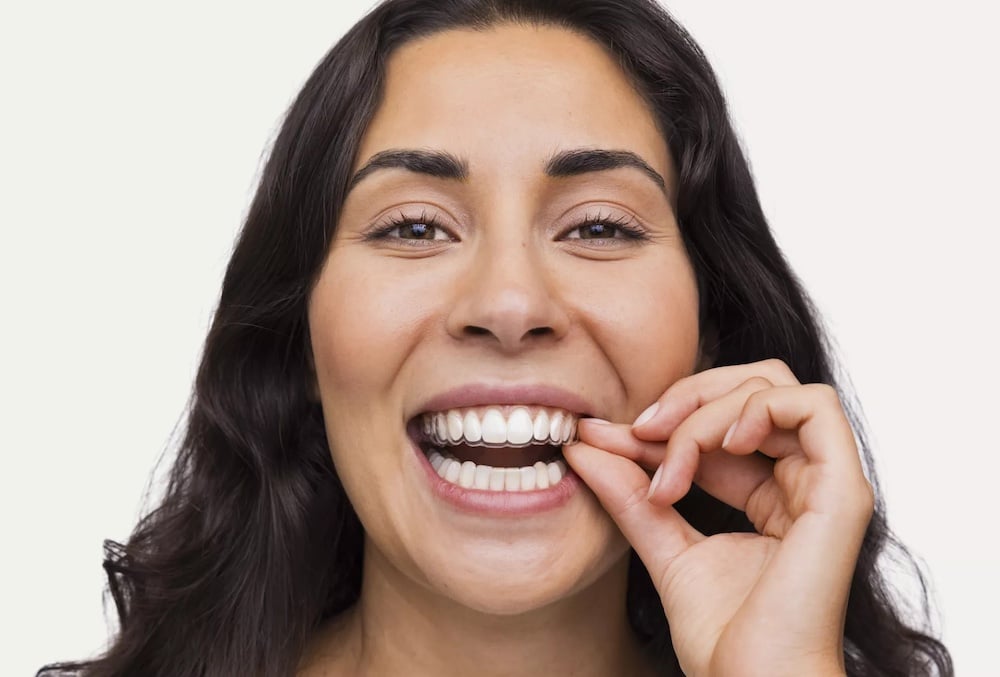
Step One: A Digital Scan, Not a Tray of Putty
Treatment begins with a digital intraoral scan that maps your teeth to a fraction of a millimeter. No impression putty, no gagging, no retakes because the mold distorted on the way out. The scan joins photographs and x-rays as the raw dataset for your case. From these three inputs, Dr. Martin Rabinovich evaluates root positions, bone support, and bite relationships, the variables that determine what movements are possible and in what order.
Step Two: The Movement Plan
Aligners do not move teeth all at once. Each tray in the series executes a small, staged displacement of specific teeth, and the sequence matters as much as the destination. Dr. Rabinovich decides which teeth move first, where to bond small tooth-colored attachments that give trays mechanical grip for rotations and vertical movements, and how much force each stage applies. The finished plan goes to the manufacturer, Ormco for Spark or Align Technology for Invisalign, which fabricates your full tray series to those specifications. The judgment in that plan is the product you are actually buying; the plastic is just how the judgment ships to your door.
Step Three: Wearing the Trays
You wear each aligner set 22 hours a day for one to two weeks, removing it only to eat, drink anything besides water, brush, and floss. The first day or two of each new tray brings pressure, which is the force system doing its job. Check-in visits run every 8 to 12 weeks: the office verifies your teeth match the plan's predicted positions, then dispenses your next batch of trays. If a tooth lags behind its predicted track, refinement aligners are ordered to correct course. Refinements are a normal engineering iteration rather than a failure, and they are accounted for in planning at this office. Tray care runs on a simple protocol: rinse whenever they come out, brush them gently with a soft toothbrush, and keep them in their case rather than a napkin, which is how most lost aligners meet their end.

Is Your Case a Fit?
Aligners perform best on mild to moderate crowding, spacing, and relapse, in adults and mature teens who will honor the 22-hour wear requirement. They struggle with severe rotations, large skeletal discrepancies, and patients still waiting on erupting teeth. Holmdel's aligner demographic skews toward working professionals and high-schoolers with packed schedules, both good compliance profiles. Still, the scan decides. If the data says fixed appliances would produce a better outcome, that is the recommendation you will hear.
What the Months After Look Like
The day your last tray retires, retention begins. Teeth are held by remodeling bone, and that bone consolidates over months, which is why retainers matter most immediately after treatment. You receive custom retainers with a wear schedule that tapers over time, from nightly wear toward maintenance. Follow it and the result holds for the long term. Free whitening is included with Invisalign treatment, so the finish line comes with a brighter smile as well as a straighter one. [Confirm promotion is current before publish.]
The Cost Variables, Specified
Treatment fees are a function of three inputs: case complexity, projected duration, and refinement allowance. Simple relapse cases sit at the low end; bite corrections with attachments and elastics sit higher. Spark and Invisalign price comparably for equivalent cases at this office, so system choice rarely moves the total. Insurance enters as an offset: most PPO dental plans include an orthodontic benefit with a per-person lifetime maximum, and MHR Orthodontics participates in-network with most of them. The remainder divides into no-interest monthly payments. Every variable gets pinned to an exact written figure at the complimentary consultation, before any commitment, which is the only defensible way to quote a system with this many inputs.
Meet Dr. Rabinovich: The Training Behind the Plan

The planning depth described above comes from a specific education. Dr. Rabinovich completed his multi-year residency in Orthodontics and Dentofacial Orthopedics at the University of Colorado, where he earned a Master of Science in Dentistry for his clinical research and treated cleft lip and palate and craniofacial anomaly patients through the Children's Hospital of Colorado, cases where movement planning carries no margin for improvisation. He returned to New Jersey board certified by the American Board of Orthodontics, a voluntary credential held by roughly 1% of dentists. During residency he also represented the Rocky Mountain Society of Orthodontists on the American Association of Orthodontists Council on New and Younger Members. Holmdel patients tend to appreciate a resume with footnotes, and this one holds up to the scrutiny.
Orthodontist in Atlantic Highlands, NJ
Our Dental Services Include:
Got a question? We have answers.
Follow us on social media!
