

At a Glance
- Service: Clear Braces (Spark Clear Aligners and Invisalign), for teens and adults, with early evaluations for kids
- Serving: Little Silver, from the train station neighborhoods to the Parker Homestead side, minutes from the office
- New patients: yes; consultations are complimentary for every age
- Key differentiator: one office evaluates the whole household, from a seven-year-old's first check to a parent's relapse case
Age Seven: The First Look, Not the First Braces
The American Association of Orthodontists recommends a first orthodontic evaluation around age seven, and Little Silver parents are right to ask if that is medicine or marketing. It is medicine, with a narrow purpose: by seven, enough adult teeth have arrived to reveal developing problems like crossbites, severe crowding, and jaw growth discrepancies while they are still cheap and simple to intercept. The overwhelming majority of seven-year-olds who come in are told everything looks fine, come back in a year, and that answer costs nothing here. The visit is not a sales funnel toward early hardware; it is a baseline that occasionally catches the one case where waiting would genuinely cost the child later.

Teens: The Prime Window
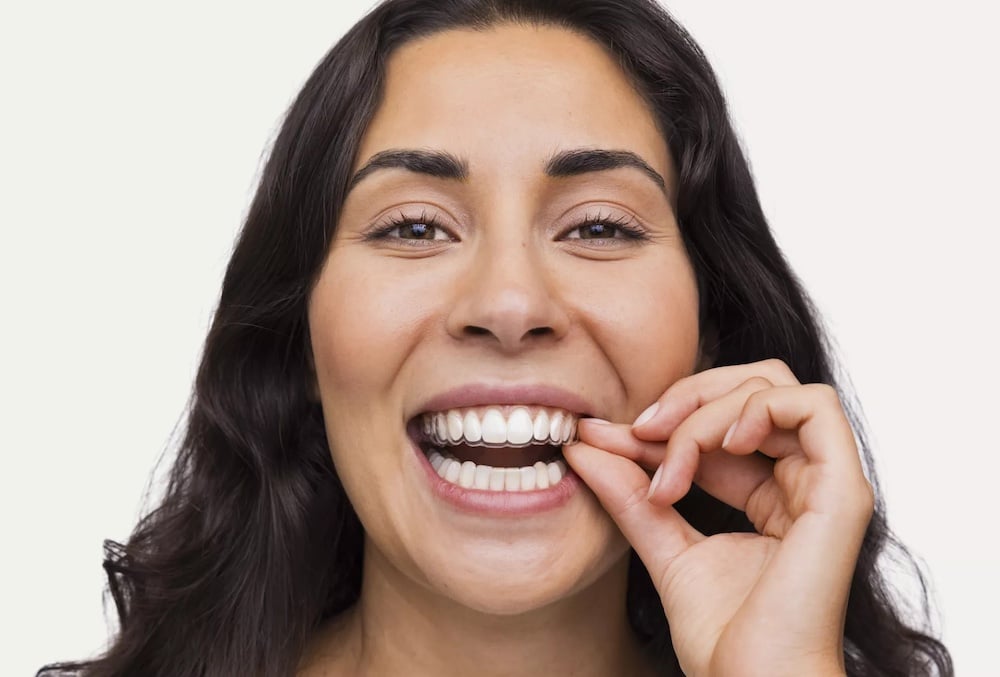
Once the adult teeth are in, teens become the classic aligner candidates, and Little Silver teens have the added motivation of wanting nothing visible in a hallway or a team photo. Both Spark and Invisalign serve them, with Invisalign Teen adding compliance indicators that fade with wear, a quiet audit trail that parents appreciate more than teens do. The honest screen is not clinical so much as behavioral: a teen who wants treatment will bank 22 hours of daily wear without being chased; a teen wearing braces for their parents may do better in LightForce fixed appliances, which remove willpower from the equation. Dr. Rabinovich reads that difference at the consultation and says which he sees.
Parents: Your Turn Exists Too
The forgotten candidate in most Little Silver households is an adult. Teeth that were straightened in 1995 and unsupervised since have usually drifted, and adult relapse cases are often shorter and simpler than a full teenage course, sometimes finishing in months. Healthy gums and bone are the only age requirement. Plenty of Little Silver parents book the evaluation for a child and end up getting two mouths scanned in the same visit, and the family that treats a teen and a parent in the same season splits appointment trips instead of doubling them.
How Treatment Works Once Someone Starts
Whoever in the household goes first, the mechanics are the same. A digital scan, photos, and x-rays feed a movement plan that Dr. Rabinovich engineers stage by stage. Trays change every one to two weeks at home, worn 22 hours a day, with small tooth-colored attachments lending grip where movements demand it. Short checkpoints every 8 to 12 weeks confirm the teeth are tracking, refinement trays handle any drift, and both Spark and Invisalign typically finish in 6 to 18 months. Afterward, custom retainers hold the result while bone consolidates, on a wear schedule that tapers from nightly toward maintenance, which is the step the 1995 cohort skipped and regrets. Whitening comes free with Invisalign treatment at this office, a finishing perk worth asking about at the consultation.
Meet Dr. Rabinovich: The Family's Orthodontist

Dr. Martin Rabinovich built his training around growing faces. His residency in Orthodontics and Dentofacial Orthopedics at the University of Colorado ran through the Children's Hospital of Colorado, treating cleft lip and palate and craniofacial cases where a child's development is the entire clinical question. Board certified by the American Board of Orthodontics, a Rutgers graduate twice over, and raised in Marlboro one township west, he practices by the rule his team recites: treat every patient the way you would want your own family treated. In a family practice, that rule gets tested across three generations a day, from a seven-year-old's first look to a grandparent's relapse case, and it is the reason Little Silver households tend to arrive as referrals from other Little Silver households, usually with the referring family's results doing the persuading.
Orthodontist in Atlantic Highlands, NJ
Our Dental Services Include:
Got a question? We have answers.
Follow us on social media!
