

At a Glance
- Service: Clear Braces (Spark Clear Aligners and Invisalign), with adult relapse cases a daily specialty
- Serving: Morganville and western Marlboro Township, from the Route 79 corridor to the Texas Road side
- New patients: yes; consultations are complimentary and lecture-free
- Key differentiator: relapse and restart cases planned from where your teeth are now, often shorter than the first round
Why Your Teeth Moved Back, and Why It Was Mostly Not Your Fault
Relapse is biology before it is negligence. Teeth sit in bone that remodels for life, fibers around the roots carry a long memory of old positions, and the retention science of the nineties genuinely undersold how permanent the holding phase needs to be. Plenty of that era's patients were handed a retainer, told to wear it for a year or two, and released; the profession now knows retention is indefinite, tapering but never quite ending. So the crowding that crept back was partly a lost retainer and partly an outdated protocol. Either way, the moral ledger is irrelevant to treatment. Teeth move at any age through healthy bone, and where they are today is simply the new starting scan.

The Technology Upgraded While You Were Gone
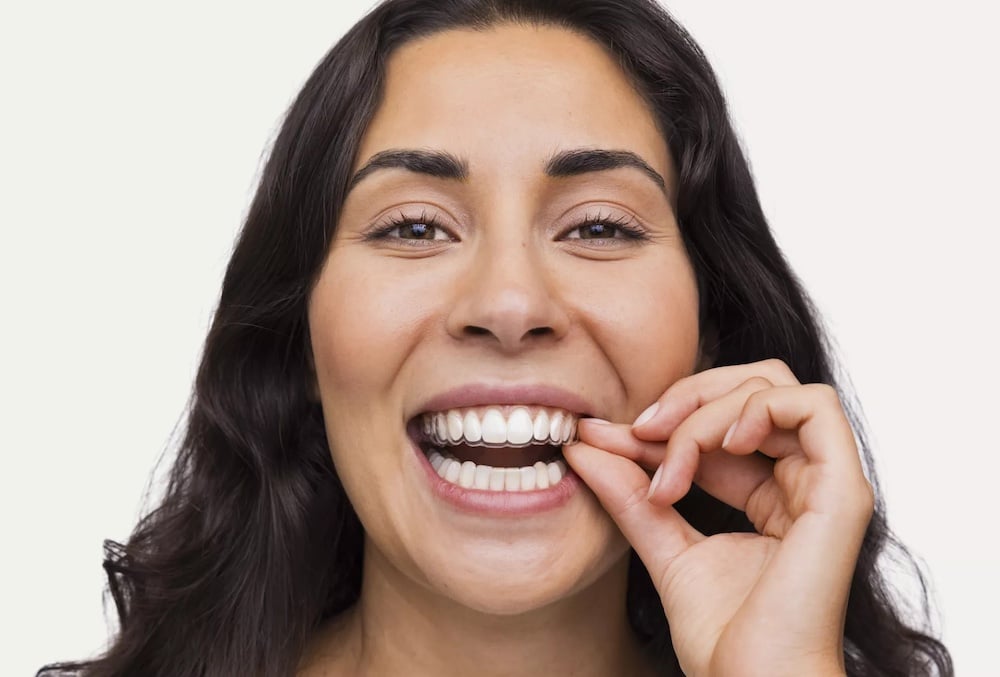
If your reference point is late-nineties orthodontics, the field has changed shape. Impressions are gone; a digital scanner maps your teeth in minutes. The appliances are transparent: Invisalign, built on SmartTrack material with the deepest clinical case history in the category, and Spark Clear Aligners by Ormco, whose TruGEN material resists staining better than the leading brand in Ormco's published lab testing and trims flat along the gumline. Trays change at home every one to two weeks, worn 22 hours a day, with small tooth-colored attachments assisting tougher movements. Dr. Martin Rabinovich, a board-certified orthodontist, engineers each plan stage by stage and checks progress every 8 to 12 weeks. For adults whose first round meant monthly wire tightenings and a mouth full of metal at the office holiday party, the current version barely resembles the memory.
Restart Candidacy: Who Qualifies for Round Two
Most relapse cases qualify, because most relapse is tooth movement through healthy bone, which is exactly what aligners reverse. The genuine prerequisites are periodontal: gums and supporting bone need to be sound, so adults with gum disease history get that stabilized first, coordinated with your general dentist. Old restorations rarely block treatment. Cases where the original bite correction never fully finished may need more than trays, and the same office carries LightForce custom braces and InBrace lingual braces for that scenario. The disqualifier that matters most is the same one it was in 1998: wear discipline. The difference is that this time, you are the one who wants it.
Doing It Differently This Time
The restart plays out quietly. Scan, plan, trays, a day or two of pressure per set, short checkpoints every 8 to 12 weeks, refinements if a tooth lags, and most cases done inside 6 to 18 months, with simple relapses at the short end. Then the part that separates this round from the last one: retention, treated as a permanent habit rather than a suggestion. Custom retainers, a wear schedule that starts nightly and tapers, and a practice that talks about the holding phase from the first visit because it watched what happened to the cohort that skipped it. You already ran the experiment once. Round two comes with the control group's data.
Meet Dr. Rabinovich: No Lectures on the Menu

A specialist who trained on the hardest developmental cases in the field, cleft lip and palate and craniofacial patients through the Children's Hospital of Colorado during his University of Colorado residency, does not flinch at recrowded lower incisors. Dr. Martin Rabinovich, board certified by the American Board of Orthodontics and raised in Marlboro Township, the same township Morganville calls home, treats relapse as the routine biology it is. Nobody in the office audits how the last twenty years of retainer wear went; the scan simply starts the clock from today. The operating rule is the one his team repeats: treat every patient the way you would want your own family treated, and nobody's family deserves a lecture for having ordinary teeth that did an ordinary thing.
Orthodontist in Atlantic Highlands, NJ
Our Dental Services Include:
Got a question? We have answers.
Follow us on social media!
