

At a Glance
- Service: Clear Braces (Spark Clear Aligners and Invisalign), alongside fixed and lingual alternatives for comparison
- Serving: Old Bridge Township, from Laurence Harbor and the Route 9 corridor to the Route 18 side
- New patients: yes; consultations are complimentary
- Key differentiator: every major straightening method offered in one office, so the comparison happens honestly in one chair
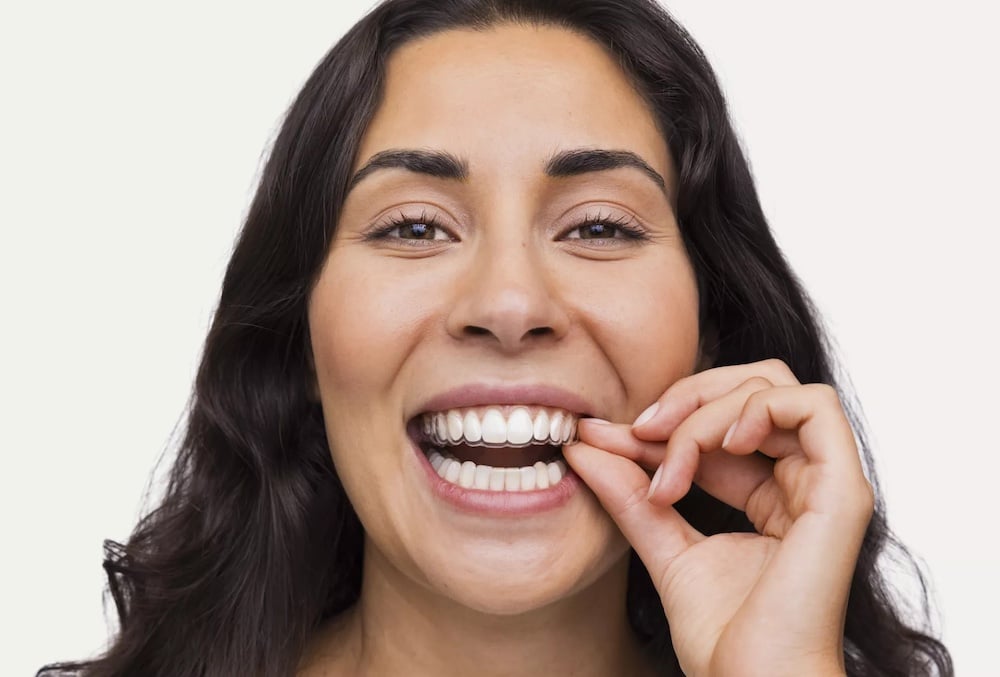
Four Ways to Straighten Teeth, Compared Honestly
Every option on the market reduces to four categories. Clear aligners, the subject of this page, move teeth through a sequence of transparent removable trays. Traditional fixed braces move them through brackets and wires that never come off. Lingual braces do the same from behind the teeth, invisible from the front. And mail-order aligners ship trays to your door with no in-person supervision at all. The first three are legitimate instruments with different strengths; the fourth is a gamble wearing the first one's clothes. MHR Orthodontics provides aligners in two systems, LightForce 3D printed custom braces, and InBrace lingual braces, which means the recommendation you get compares real options rather than defending the only product in the building.

Aligners vs. Fixed Braces: Where Each Wins
Aligners win on daily life: removable for meals, invisible at conversation distance, no wire emergencies, and checkpoints only every 8 to 12 weeks. Fixed braces win on control and compliance: they never leave the mouth, so willpower exits the equation, and they handle severe rotations, large bite corrections, and complex vertical movements that trays struggle to grip. Teens whose motivation is mostly parental, and cases whose geometry is genuinely hard, often finish better in fixed appliances. The honest summary: aligners are the right tool for most mild to moderate adult and teen cases, fixed braces for the hard ones, and a specialist who offers both will tell you which side of that line your scan lands on.
Specialist Supervision vs. Mail-Order: The Part That Is Not Plastic
The comparison that saves Old Bridge patients real money is the one between supervised and unsupervised treatment. A mail-order program takes one impression, ships a fixed sequence, and hopes your biology follows the script. Supervised treatment measures your actual tooth positions against the plan every 8 to 12 weeks and corrects drift with refinement trays before the error compounds. Teeth do not read scripts; some move early, some lag, and the cases that finish where they were designed to finish are the monitored ones. The plastic is comparable. The supervision is the product.
Who Each Option Fits
Aligner candidates bring mild to moderate crowding, spacing, or relapse from earlier treatment, plus honest wear discipline. Fixed appliances suit severe rotations, major skeletal corrections, growing kids, and reluctant wearers. Lingual braces serve patients who need fixed control with zero visibility. Children still shedding baby teeth usually wait, with monitoring instead of hardware. Old Bridge's mix of commuters, shift workers, and multigenerational households covers every one of those profiles, which is exactly why a single-product office serves the township poorly. The complimentary consultation ends with a scan-based answer, not a category defense.
The Shape of Treatment, Whichever You Choose
An aligner case at this office runs on a simple loop. Digital scan, photographs, and x-rays feed a stage-by-stage plan; trays change at home every one to two weeks; tooth-colored attachments assist stubborn movements; brief checkpoints every 8 to 12 weeks confirm tracking and dispense the next series. Expect a day or two of pressure per new tray, nothing more dramatic. Afterward, custom retainers hold the result while the bone consolidates, on a wear schedule that tapers from nightly toward maintenance. Fixed-appliance cases trade the home tray changes for periodic adjustments, and everything else about the supervision rhythm stays the same.
Meet Dr. Rabinovich: Why Patients Cross the County Line

Old Bridge sits in Middlesex County, and patients passing closer offices to reach this one are buying something specific. Dr. Martin Rabinovich is board certified by the American Board of Orthodontics, the voluntary written-and-clinical-examination credential that only a fraction of practicing orthodontists earn. His path ran through Rutgers School of Dental Medicine, then a specialty residency in Orthodontics and Dentofacial Orthopedics at the University of Colorado with a research-based Master of Science in Dentistry and a caseload of cleft and craniofacial patients through the Children's Hospital of Colorado. He offers every major appliance category under one roof and reviews every case personally at every visit. The county line is an administrative fact; the credential gap is a clinical one, and thirty minutes on Route 18 is a reasonable price for it.
Orthodontist in Atlantic Highlands, NJ
Our Dental Services Include:
Got a question? We have answers.
Follow us on social media!
