

At a Glance
- Service: Clear Braces (Spark Clear Aligners and Invisalign), plus fully hidden lingual braces for zero-visibility cases
- Serving: Rumson, from the Victory Park and river neighborhoods to the Oceanic Bridge side
- New patients: yes; consultations are complimentary and unhurried
- Key differentiator: the county's full range of low-visibility options, including behind-the-teeth braces, in one office
How Invisible Is Invisible, Measured
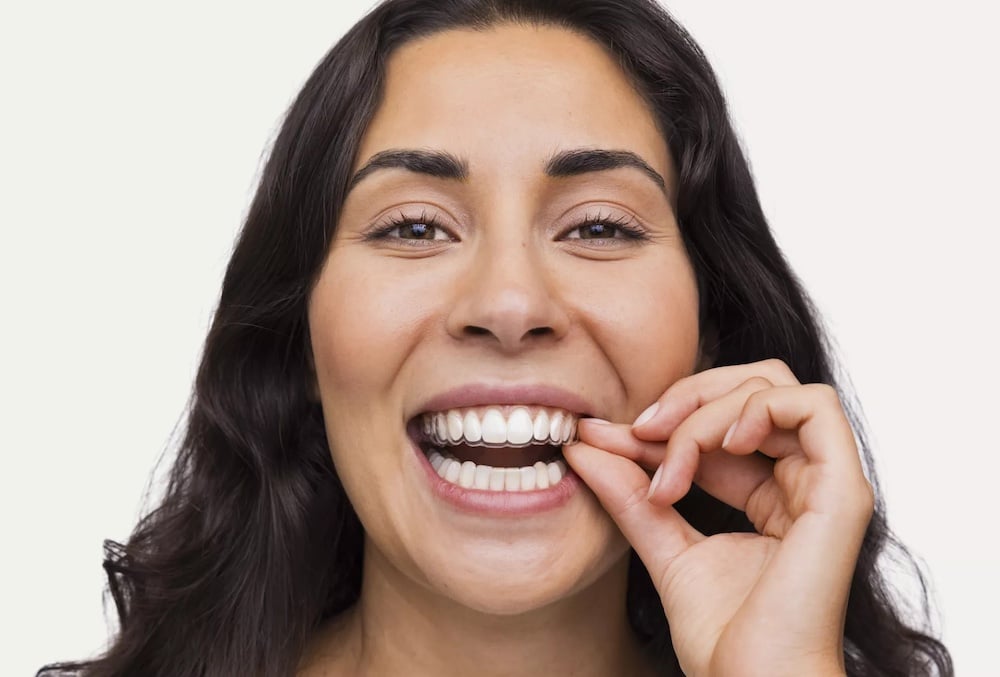
Take the three distances of a Rumson week. Across a dinner table, roughly four feet, clear aligners read as nothing; the trays are transparent and sit flush, and the tooth-colored attachments some cases use register as ordinary enamel. Across a conference room, ten feet, there is simply nothing to see. The only distance where aligners become detectable is intimate conversation range under direct light, and even there, detection requires someone looking for them. Patients consistently report the same field result: colleagues, clients, and half their own household never notice until the finished teeth start collecting comments. Vanity was never the obstacle it believed itself to be. The obstacle was outdated information, and this page retires it line by line.

What Treatment Asks of a Full Calendar
Remarkably little. Aligner trays change at home every one to two weeks and require 22 hours of daily wear, which leaves a two-hour daily budget for meals, the club dinner, and the fundraiser toast; the trays slip out for the evening's main event and back in before the drive home. Office checkpoints run once every 8 to 12 weeks and stay short. New trays bring a day or two of pressure, timed to start at bedtime if you prefer the adjustment to happen while you sleep. There are no emergency wire visits and nothing to break at an inconvenient hour. The process was practically designed for people whose calendars are the family utility.
The Materials, for the Detail-Oriented
Both aligner systems in the office are premium instruments, and the differences reward a close read. Spark Clear Aligners, made by Ormco, use TruGEN material that resists staining better than the leading brand in Ormco's published lab testing, a live issue for espresso habits and cellar-worthy reds, and their trim line runs flat and polished along the gums. Invisalign counters with SmartTrack material and the deepest clinical case library in the category. Both change every one to two weeks and finish most cases in 6 to 18 months. Dr. Rabinovich specifies the system whose mechanics favor your movements; the discretion profile is excellent either way.
Candidacy at Conversation Distance
Clear braces suit mild to moderate crowding, spacing, and the relapse that follows decades-old orthodontics, in adults and teens who will keep trays in. They are the wrong tool for severe rotations and major skeletal corrections, which is precisely where the lingual and custom-bracket options earn their place in the same office. Rumson teens at the regional high school get the same candor as their parents: motivated wearers thrive in aligners, reluctant ones do better in fixed appliances, and the consultation names which one is sitting in the chair. The scan decides the clinical half; an honest conversation decides the rest.
After: The Part Everyone Sees
Treatment ends and the visibility equation flips. The months of undetectable process give way to a permanently visible result: teeth that photograph evenly from every angle, a smile that no longer gets managed in company. Custom retainers protect it while the bone consolidates, worn nightly at first and tapering to maintenance, an entirely private habit. The whitening that MHR Orthodontics includes with Invisalign treatment lands at this stage, brightening surfaces the alignment just made even. [Confirm promotion status before publish.] The discreet phase was temporary; the part people notice is the part that stays.
Meet Dr. Rabinovich: Credentials That Travel Well

Rumson vets its professionals, so here is the file. Dr. Martin Rabinovich holds board certification from the American Board of Orthodontics, the voluntary examination-based credential that only a fraction of practicing orthodontists complete. His Doctor of Dental Medicine is from Rutgers School of Dental Medicine; his specialty residency in Orthodontics and Dentofacial Orthopedics and his Master of Science in Dentistry are from the University of Colorado, where his caseload included cleft lip and palate and craniofacial patients through the Children's Hospital of Colorado. He is a member of the American Association of Orthodontists and the Monmouth Ocean County Dental Society, and he grew up in Marlboro, which means the reputation he practices under is a local one with no exit strategy. Every case, including yours, is planned and supervised by him personally.
Orthodontist in Atlantic Highlands, NJ
Our Dental Services Include:
Got a question? We have answers.
Follow us on social media!
