

At a Glance
- Service: Clear Braces, offered as Spark Clear Aligners or Invisalign
- Serving: Tinton Falls, from the Sycamore Avenue side by the falls to the outlets corridor and the Earle border
- New patients: yes; first consultations are complimentary
- Key differentiator: one board-certified specialist personally reviews every case at every checkpoint
Monitored Process or Expensive Gamble
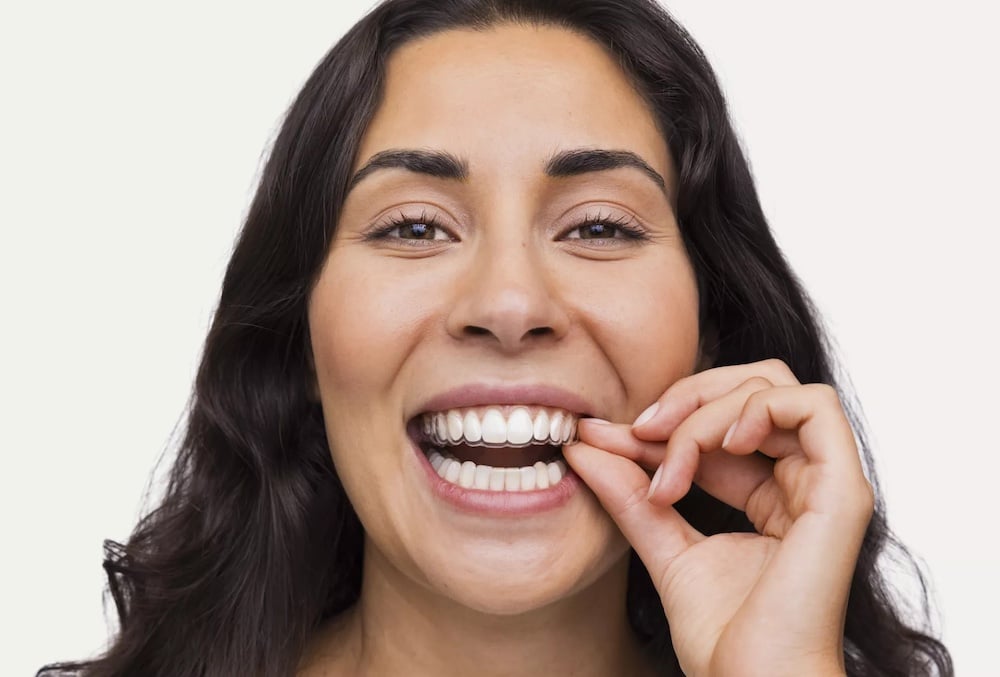
Clear braces move teeth through a series of transparent, removable trays, each one advancing specific teeth a small, planned distance. The plan comes first: digital scans, photographs, and x-rays feed a stage-by-stage, tooth-by-tooth movement sequence that Dr. Martin Rabinovich, a board-certified orthodontist, engineers before a single tray is made. Then biology gets a vote. Teeth respond to force at slightly different rates in every mouth, which is why an unmonitored tray sequence is a bet, and a monitored one is a process. The entire clinical difference between specialist treatment and a box of mail-order plastic lives in what happens after the plan is written.

When a Tooth Goes Off Script
Sometimes a tooth lags, rotates short, or resists a movement. Caught at a checkpoint, the fix is routine: refinement trays, a supplemental series that folds the correction into the case, sometimes helped by repositioning a tooth-colored attachment for better grip. Caught late, or never, the same drift compounds through every remaining stage and finishes the case millimeters from where it was designed to land. This is why refinements at MHR Orthodontics are planned into treatment from the start rather than sold as a surprise add-on, and why the checkpoint calendar is non-negotiable even for patients who feel like everything is going fine. Feeling fine is not data, and the difference between the two is the entire argument for supervised treatment.
Two Systems, One Standard of Supervision
The monitoring discipline applies identically to both systems in the office. Invisalign brings SmartTrack material and the longest clinical track record in the aligner category. Spark Clear Aligners, made by Ormco from TruGEN material, show better stain resistance than the leading brand in Ormco's published lab testing and deliver sustained force for predictable tracking, trimmed flat and polished at the gumline. Both typically run 6 to 18 months. The brand decision follows the movements your case needs; the supervision standard does not change either way. And where aligners are the wrong instrument entirely, LightForce custom braces and InBrace lingual braces are available under the same roof and the same monitoring rhythm.
Who Should Start, and Who Should Wait
Good aligner candidates bring mild to moderate crowding, spacing, or relapse from earlier orthodontics, plus the honesty to commit to daily wear. Tinton Falls adds a demographic wrinkle worth naming: the borough houses a substantial retirement community, and older adults with crowns, bridges, and implants often assume aligners are off the table. Frequently they are not; treatment plans work around restorations routinely, though implants themselves do not move and get planned into the case as fixed landmarks the other teeth organize around. On the other end, children still shedding baby teeth usually wait. Severe rotations and major skeletal corrections point to fixed appliances at any age. The scan settles it, and the consultation that produces the scan is complimentary.
Retention: The Last Monitored Mile
Supervision does not end with the last tray. Bone consolidates around moved roots for months after active treatment, so custom retainers hold the result on a schedule that starts nightly and tapers, with follow-up checks confirming the teeth are holding position. Patients who honor the retention phase keep their result for decades; patients who improvise it become the relapse cases every orthodontist quietly re-treats. Finishing well is a monitored process too.
Meet Dr. Rabinovich: The Specialist Doing the Supervising

The checkpoint system only works if the person reading the checkpoints can interpret them, and that is the point of a single-specialist practice. Dr. Martin Rabinovich, board certified by the American Board of Orthodontics, personally reviews every case at every visit; there is no rotation of associates and no delegation of the clinical read. His residency in Orthodontics and Dentofacial Orthopedics at the University of Colorado included the specialty's most demanding caseloads, cleft lip and palate and craniofacial anomaly patients through the Children's Hospital of Colorado, where movement plans tolerate no drift at all. A Monmouth County native and Rutgers-trained, he brought that standard home. The supervision this page describes is not a system the practice bought; it is how its one doctor works.
Orthodontist in Atlantic Highlands, NJ
Our Dental Services Include:
Got a question? We have answers.
Follow us on social media!
